Tuesday, March 29, 2016

Coral Bleaching by Kelsey Saunders


Coral reefs are caused by the changing climates. These reefs affect the fish population as well as the ocean ecosystem. The damaged coral cannot provide a stable ecosystem for the ocean. This damaged coral can cause shifts in the fish ecosystems and can also bring down tourism dollars. The damaged reefs can result in the decrease of fish which in turn results in the decline of fish captures. Coral reefs can also attest to pharmaceutical medicines like medicines for heart disease and cancer, but the damaged coral cannot give any benefit to these pharmaceutical companies.
The study and the issue directly relate to the course because it deals with the coral and how temperature change and pollution can directly affect their genetics. Coral bleaching brings a handful of ecological impacts and related mortality. Some of these issues are: Bleached corals are likely to have reduced growth rates, decreased reproductive capacity, increased susceptibility to diseases and elevated mortality rates. Changes in coral community composition can occur when more susceptible species are killed by bleaching events. Changes in coral communities also affect the species that depend on them, such as the fish and invertebrates that rely on live coral for food, shelter, or recruitment habitat. Change in the abundance and composition of reef fish assemblages may occur when corals die as a result of coral bleaching. Declines in genetic and species diversity may occur when corals die as a result of bleaching.
            These are disastrous events to our oceans that need to have a constant observations. We as the human race need to take more preventable steps with global warming. Preventative steps such as cleaner fuels and less coal burning. The less toxic chemicals and gases that we have going into our atmosphere the less greenhouse effect we’ll have and lower global warming. I believe the coral reefs are one of our world’s greatest treasures and we need to do what we can to protect and preserve them. Not only the reef themselves but the species and lifeforms that depends on them for shelter and food. Reducing overfishing and coastal pollution are two steps we can take day to day, while the bigger issues such as greenhouse gases need to be addressed by world leaders.

coral bleaching
Article credits: http://www.reefresilience.org/coral-reefs/stressors/bleaching/bleaching-impacts/
Photo credits: Catlin Seaview Survey


Sunday, March 27, 2016

New Study on Sea Cucumbers Raises Red Flags for Global Fisheries by Robert Olsen

     Although small and often overlooked, the sea cucumber plays an integral role in underwater ecosystems. They provide frequent cleaning services to the ocean bottoms through their feeding process. Using feeding tentacles, the sea cucumber ingests sand and rubble through its digestive system in search of food. As it passes through the digestive system, nutrients are absorbed and cleaner, more oxygenated sand is expelled. Marine ecosystems rely heavily on cleaning services like this in order to remain healthy. Where the problem arises however, is that these small creatures are in high demand in East Asia both as a source of food and for use in medicine. Due to this consumer demand, the sea cucumber is being overfished. The overfishing, combined with water pollution and habitat destruction, is spelling out possible extinction for many sea cucumber species. A study was done by Dr. Iria Fernandez-Silva and two colleagues that examined the genetic diversity of the sea cucumber species that lived along the coastline of Okinawa, Japan. What they found was that there was very low genetic diversity in the species that inhabited areas that were contaminated with pollution. Because of the low genetic diversity, the species have an increased chance to face extinction since they cannot adapt to changes in their environment as easily as a species with a greater genetic diversity.
     This specific study relates to the course because it is studying the genetic diversity of the sea cucumbers. Also, by looking into the genetics of many different species of sea cucumbers, it is dealing with the species diversity as well. In addition, the article makes the sea cucumber seem like a keystone species in its ecosystem. Without its cleaning services, the entire ecosystem would suffer and begin to negatively change. Overfishing was also discussed and this relates to the documentary that we recently watched during class. Although the species that were being overfished were different, the outcome in both situations were very similar. Both species were facing the risk of extinction.
     Personally, I feel that the sea cucumber should not be fished for if that is increasing its chances of going extinct. As the study showed, the sea cucumber cannot adapt adequately enough to the changes in its environment if fishing is increased, therefore no fishing for the species should be allowed in order to ensure their survival as a species.

Holothuria edulis        https://reefcorner.com
http://phys.org/news/2016-03-burnt-hot-dog-sea-cucumbers.html
Old Growth Forests Are Valuable Carbon Sinks
Taylor Friedman

According to recent studies, old growth forests are found to be "carbon sinks" which absorb carbon dioxide from the atmosphere and reduce negative effects on climate change. Unfortunately, these forests aren't protected by international treaties and aren't significant to the national carbon budgets put into place at the moment. Researchers from Oregon State University said, "Much of this carbon, even soil carbon, will move back to the atmosphere if these forests are disturbed." Trees have been proven to absorb more carbon dioxide than they release, which really impacts greenhouse gas production and global climate change. A study from the 1960's has been the basis of many decisions made about the issue of carbon dioxide management that said these old growth forests are "carbon neutral," producing as much as they absorb. Newer studies, however, have found this inaccurate. Old growth trees, when left alone, continue to absorb carbon for many centuries. As one tree dies due to natural causes, there's usually a second layer of foliage there to maintain productivity.  Ultimately, if they are left intact, old growth forests will help prevent enormous amounts of carbon from leaking back into the atmosphere. This topic is very relevant to the Principles of Ecology course, and relates to many of the topics we have covered so far. Carbon dioxide is known to be one of the harmful chemicals that contributes to greenhouse gases, and can be very dangerous to the environment when excess amounts are introduced into the atmosphere. Old growth trees are integral parts of the ecosystems that make up old growth forests. As more and more of them are being cleared and cut down, less carbon is being absorbed, and is wreaking havoc in the form of climate change. I think that these forests should be protected at all costs. Treaties must be compiled to save them from being cut down and degraded for the sake of our planet's well-being. It's obvious now, with more extensive studies being conducted, that the old growth trees aren't "carbon neutral." The increasing amount of carbon found in the atmosphere recently is leading to many issues worldwide, and is a very serious problem. If leaving old growth forests intact will greatly help reduce the amount of carbon emitted into the atmosphere, preventing greater changes in global climate, it is our duty to protect them.


Oregon State University. "Old Growth Forests Are Valuable Carbon Sinks." ScienceDaily. ScienceDaily,      14 September 2008. <www.sciencedaily.com/releases/2008/09/080910133934.htm>.

Photo Credit: British Columbia old-growth rainforest  iStockphoto/Robert Koopmans


Sunday, March 13, 2016

Shark babies remain strong in future acidic oceans


A recent study has been released that makes the claim that developing shark embryos will not suffer in future acidic oceans. Dr. Jodie Rummer and a team from the ARC Centre of Excellence for Coral Reef Studies at James Cook University studied Epaulette sharks in their development phase. The group saw that there was no explicit differences in the growth and survival of acidic conditions as opposed to normal conditions. Therefore, the survival of the young sharks will be advantageous in decreasing pH levels. This is credited to shark gills having the ability to correct pH disturbances within themselves. The team raised epaulette shark young from between ten days after having been laid to thirty days after they hatched. They measured tail and gill movement and development, as well as yolk consumption. Two groups were watched, in conditions moving between normal conditions, and predicted acidic conditions of oceans from the year 2100. The team mentioned their concerns that the highest chance for mortality was before the babies developed their gills.
This study relates ecology for the purposes of increased chance of survival during predicted worsening conditions. Thus, adaptations and prerequisite conditions to survival are key to the class. It is relates due to the relation to climate change. With worsening conditions as the climate is affected negatively by human actions, it becomes clear that many species will soon die out due to inability to adapt. However, with certain species, like the Epaulette shark, they will survive and prosper due to their unique adaptations in their gills. So as time progresses, the species will continue with    little worry of extinction from climate based acidic conditions. This relates based on the focus of ecology, interactions within the environment, and the affect that humans have had on the environment and many other species.

Personally, I believe this to be a unique and amazing chance for sharks. As many sharks have had problems due to human activities, such as over fishing for fins, as well as other harmful effects like netting, the fact that this specie of shark can survive in conditions that will undoubtedly be harmful to other species will be a blessing. 

Photo credit: C. Gervais

Source: https://www.sciencedaily.com/releases/2016/03/160308105629.htm

The Clean Up of Onondaga Lake By John Valerio

            In recent years, the community of Syracuse, New York and Honeywell International has been making an effort to cleanup and depollute Onondaga Lake. For many years, Onondaga Lake was thee most polluted lake in the entire United States of America. There were two main reasons why the pollution started in Onondaga Lake. The first reason was that the lake was used as place to drain sewage wastewater.  The second reason why the lake became polluted was because of chemical dumping by Allied Chemical (now referred to as Honeywell International). The water was contaminated with mercury as well as other harmful chemicals and by-products. This dumping was done for decades. There has been improvement with the contamination of the lake. The Health Department and the Environmental Protection Agency are starting to declare that the lake is in a good enough state that people are now able to swim in it. Joseph Martens who over saw the project says he would jump into the lake when it gets cleared by the Health Department and the EPA. He is doing this because the people of Syracuse are taught that they should not even go near Onondaga Lake because the water was so polluted and it can cause serious health issues. He wants to show the residents of Syracuse that it is okay to swim in the once extremely polluted lake. Another breakthrough that Onondaga Lake faced is that the Health Department has deemed that some of the fish are now edible. The Health Department says only some of the fish are okay to eat and that men under the age of 15 and women under the age of 50 should not eat them.
This issue and newspaper article from the New York Times relates very nicely with our class discussions. One thing that we have talked about is how human affect the surrounding environment. Humans were responsible for the contamination of Onondaga Lake. We have also talked about how the pollutants we produce and release into the environment can harm other living organisms. The fish as well as other living organism that require the lake have been severely harmed because of the decades of chemical dumping and the dumping of sewage wastewater.  Although we haven’t discussed the conservation of certain environments, it is something can relate to the theme of our class.

            I agree with the effort to cleanup Onondaga Lake. I might be a little bias because I am from Syracuse. But growing in Syracuse, I use to plug my nose and hold my breath because of the smell that the lake produced. The area is so nice and it’s a shame that lake was polluted and because of that the park was never used until recently. If I look at this issue from an unbiased position, I would still agree that the lake should be cleaned up. 


Sources- http://www.nytimes.com/2015/07/22/nyregion/despite-pollution-warnings-an-official-will-jump-into-onondaga-lake.html
-http://blog.syracuse.com/graphics_impact/2008/09/0928_onondaga_honeywell_cleanup.jpg

Thursday, March 10, 2016

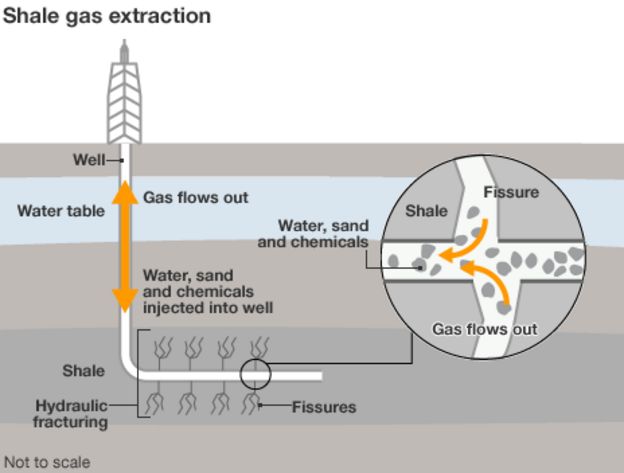
Hydraulic Fracturing- Good or Bad?

A lot of discussion has been going on recently on what the states and/or the federal government should do on the question of fracking.  Some states, like Pennsylvania, have legalized fracking, and are seeing unquestioned economic boom and lower energy costs.  Supporters of fracking argue that any serious environmental risk is yet unproven, and the economic reward with the influx of rare chemicals is well worth the risk.  However, research suggests that emerging environmental effects on the region could be potentially disastrous.  Initial reports show that fracking could and has led to the contamination of groundwater by dangerous chemicals, human exposure to these toxic chemicals, and further worsening of global warming and air pollution.  This has led some states, like New York, to ban hydraulic fracturing in order to protect our environment.  The question thus is, what should be done about fracking?  Should more research be done before we allow fracking to take place in order to fully understand environmental impacts, or should we start fracking now, seep the rewards, and potentially revise later on if these environmental risks prove to be credible?


In order to fully understand everything surrounding this controversial, we must first investigate the process behind the removal of chemicals from deep underground, called fracking.  Fracking involves smashing and breaking bedrock with millions of gallons of water, in order to bring deep underground and untapped gas to the surface.

The latest issues concerning fracking involve cases in California and Florida, in which case, fracking related spills have occurred.  As scientists point out, most compounds used in the process are harmless, however, some can cause major environmental damage.  That being said, I believe the right approach to take is to set in place strict regulations before fracking is able to be put into practice.  In addition, fracking should not be allowed in high risk areas or regions with high populations where the effects could be heightened.  With greater transparency and oversight, environmental impacts could be minimized while still reaping the economic benefits.  However, if further environmental damage is shown to occur, the state should take action to prevent fracking.

http://serc.carleton.edu/NAGTWorkshops/health/case_studies/hydrofracking_w.html
http://www.sciencedaily.com/releases/2016/03/160309160737.htm
http://ichef-1.bbci.co.uk/news/624/media/images/65309000/gif/_65309507_shale_gas_extraction464.gif

Tuesday, March 8, 2016

Can Rigs Become Reefs: The Real Catch 22 by Daija Green

Joe Platko 
In this course, we talk a lot about the environmental impact that humans have on the earth and what that exactly means for our resources. The issues of the oil industry are controversial because while so many things in our daily lives require oil to operate, drilling for oil disrupts water and wildlife, contributes to both light pollution and air pollution and can disturb entire ecosystems. What happens when an offshore oil rig can become a center point for an ecosystem?
An oil rig that is located off the coast of California is gaining notoriety not for an oil spill, but because of the abundance of oceanic life that was found to be living on the rig. The way that the rig is situated in a cold current area makes it easier for the fish and sea life in that area to sustain themselves. The growth of life here has become more productive than coral reefs and estuaries. Animals are not coming from different areas to settle at the rigs, they are animals that were already there and continued to create new life in that area.
Although it is good that life can sustain itself in this environment, it still proves to be a hot topic of debate. When Arnold Schwarzenegger was the governor of California, he signed a bill that allowed oil rigs to be partially decommissioned and turned into reefs for aquatic life. Partial decommissioning means that while the rig would still remain in the water, all of the holes or leaks will be filled in to make it safe and turned into a place for sea life to flourish, while the top 80 feet of the rigs are removed to allow ships to pass and not get caught in the rig, they can also be used for recreational diving and fishing. Environmental activist groups, however think that this is bringing too much positive attention to the oil industry and is taking away attention from the fact that oil drilling is still detrimental to our environment.  
While I agree that the oil industry will cause harm to our natural resources and environment in general, I think that we might as well make the best out of what we can. I do not think that new oil rigs should be put into the water with the thought that they will eventually turn into reefs, but with the rigs that are already there, we should make the best out of them. It was said that full decommissioning would be very expensive, so if partial decommissioning is more cost effective and can provide a safe home for aquatic life, it should be done. This is a very interesting topic that has no clear cut answer. I believe that if people say that we should not convert the already out of use rigs, then they do not see the necessity to make the best out of what we have, however if people think that we should keep drilling offshore knowing that we can create reefs they are not seeing how precious our natural resources really are.

Source:
http://www.nytimes.com/2016/03/08/science/marine-life-thrives-in-unlikely-place-offshore-oil-rigs.html?rref=collection%2Fsectioncollection%2Fscience&action=click&contentCollection=science&region=rank&module=package&version=highlights&contentPlacement=1&pgtype=sectionfront&_r=0

Exposure to air pollution increases risk of obesity


Photo: ChinaFotoPress/Getty Images

            "Laboratory rats who breathed Beijing's highly polluted air gained weight and experienced cardio-respiratory and metabolic dysfunctions after three to eight weeks of exposure." The study was conducted by Duke University appeared in the Journal of the Federation of American Societies for Experimental Biology. It is well known that China currently is experience high levels of air pollution, and by breathing this air it may cause serious health problems not only for these rats but humans as well. The experiment took two groups of pregnant rats and put one group in a chamber that was exposed to the polluted air in Beijing  and the other rats were placed in a chamber where the air was clean via air filter. The results showed that just after 19 days the rats exposed to polluted air showed increased weight, increased cholesterol, and increased insulin resistance (a precursor to diabetes). Both groups were fed the same food and all other conditions were kept constant. The offspring of these pregnant rats showed similar results but the negative effects were less pronounced. The experiment concluded exposure to air pollution can have nasty negative effects. In regard to the offspring it may prove that longer exposure will yield similar results. "If translated and verified in humans, these findings will support the urgent need to reduce air pollution, given the growing burden of obesity in today's highly polluted world,"
                 This study relates to principles of ecology due to our obvious need to protect the environment and make more urgent, the need to be as sustainable as possible. A major cause of the polluted air comes from us burning fossil fuels like coal, oil, and gasoline which we are still reliant on to power our cars and produce electricity. Being more sustainable, we could look for and implement alternative sources of power that would not harm the environment, like wind power, solar power, and hydro power. This pollution not only effects humans, but the entire ecosystem that we inhabit, so the animals, plant life, and so on. So it is not just our responsibility to take care of ourselves, its our responsibility to save and fix the world we are ruining.
                 This article made me sad a little. The need to clean up our earth and resort to cleaner and more efficient ways of obtaining energy are obvious. The fact that they have to continuously do experiments and show us how all the things we are currently doing are hurting us now and if we do not stop can hurt us a whole lot more down the road. I feel as though we are procrastinating, because we cannot see the results, we cannot see the true monstrous form of this problem. It is a slow and terrible process that may be irreversible once its too late. We are making strides to live more sustainable, and educate the world on its dire need to come together to fix this issue, but I am sorry to say that strides are not enough, we need a slap in the face, and we need to be forced to do this pronto. Forget politics, conflict, religion, traditions, money and all of it...because if we do not address this quickly and seriously all of those things I just mentioned are not going to exist anymore. It is possible to live cleaner, we are a brilliant species, we just have to do it. because soon we might just get fat and develop health problems by simply breathing.

Sources:
https://www.sciencedaily.com/releases/2016/02/160219111219.htm


Sunday, March 6, 2016

The Environmental Impact on the Illegal Growing of Marijuana by Hannah Speer

https://news-images.vice.com
In recent years, the country has been faced with a push to legalize the infamous herb, cannabis.  At the moment, marijuana is only legal in 2 states for recreational use.  Other states have legalized the herb for medical use, and those suppliers grow their cannabis legally.  While marijuana is legal in some states under certain circumstances, it isn't legal everywhere.  This in turn provides obstacles for individuals who wish to obtain the herb.  As a result, marijuana is grown illegally and it has negative effects on the environment.  Growing marijuana is not an easy task because of the specific requirements the plant needs to thrive, and the legality of the growing process.  Growers need to keep in mind that their location needs to be hidden to avoid thieves that may want to steal their product, and law enforcement.  The actions that growers take to protect their herb has detrimental effects on the environment in which cannabis is being grown.  For example, environmental conservationists find that growers need to clear areas of land were their plants can thrive. This often requires cutting down vegetation and trees to fit the needs of the plant.  Environmental conservationists also find that growers in remote areas often destroy water sources such as streams and creeks because of the toxic chemicals used in the growing process.   This destruction of water sources kills fish and other wildlife living in them. Also, to keep their product healthy, growers often use pesticides such as rat poison that effect the plant in a positive way, but the environment in a negative way. In 2013 a study showed that that rat poison used as pesticides in illegal growing operations was making its way through the ecosystem in the Sierra Nevada and had detrimental effects on its wildlife. 
                Areas where marijuana is grown illegally are suffering because of the plant’s production.  However, places were marijuana is grown legally are suffering as well.  This is because of amount of energy that is required to grow this plant.  In order for marijuana to thrive, it requires lots of direct sunlight.  This means that when grown indoors this plant eats up a lot of energy and in turn has a large carbon footprint.  Since the demand for marijuana is high, production is also high, the carbon footprint is only getting bigger.

                There is however a light at the end of the tunnel.  These ecological problems can be solved if cannabis was legalized at the federal level.  When this occurs, the government can enforce strict laws that both benefit the environment, and benefit the growers. They can prohibit cannabis to be grown indoors which consumes a large amount of energy.  These laws can also enforce rules that protect the environment while this plant is being grown.  If marijuana is legalized, then growers no longer need to hide their product in remote places which hurts the environment.  This means less destruction to the environment.  Since cannabis is found in nature, it deserves to be grown there.